Last winter Deb and I went to Panama City, Panama on two separate visits. While there we went tours that we totally enjoyed. At some time in the future we may decide to go back there. This time we decided to go to a country we had never been to and had heard many good things about. The country is Ecuador, and the city we explored is Quito, it’s capital.
Quito is a much larger city than we thought. It’s nickname among Ecuadorians is “The banana city”. That refers to the shape of the city. It is 30 miles long, and is located in the Guayllabamba River Basin, on the slope of Pichincha Volcano in the Andes Mountains. The volcano has not erupted in over 350 years, so we decided to take the chance that it wouldn’t spew forth any lava or ashes while we were there. We got lucky!
The drive into the city from the airport takes about 45 minutes, depending on traffic and the time of day. Seeing the colors of the buildings go on for miles along the mountainside was wonderful. Latin Americans love to paint houses, stores, any building really, in bright colors. We have come to expect and appreciate that about the areas we visit. But this city being located on the side of a volcano made it look like, at times, that it was balancing precariously and could fall at any time. Obviously that is not the case, but the optics were pretty special. A beautiful city in a beautiful setting.
Quito is situated at an elevation of over 9000 feet. At times during our tours we were over 9900 feet above sea level! We certainly noticed this at times if we walked too fast or were going uphill. But we seemed to adapt rather quickly, and really enjoyed the cooler temperatures. There is only one capital city located at a higher altitude than Quito. That city is La Paz, Bolivia. La Paz is at an elevation of just under 12000 feet!
The history of Quito as a city goes back over 450 years. Archaeologists have found evidence of tools and artifacts dating back to around 8000 BC. This city and country, as many of the Latin American areas, were once colonies of Spain. It wasn’t until 1822 that Quito won it’s independence from Spain. I could go on about telling you about the history of the area, but that isn’t what this blog is about. And some of that history will be included by telling you about our days there and the pictures we took.
We took two tours on our first full day there. It was a long day for us, but we enjoyed every moment of it. I will tell you about those tours, including pictures, on this posting. When I get done I will then write a new post about our second full day in Quito. We did so much in those two days that I don’t want to try to cram everything onto one blog posting. If you like roses and orchids, you will love the post from our second day.
We took a morning tour of Old Quito. This is where the city originated and many of the buildings date back 125 years and more. Old Quito is well kept, and those buildings that were starting to show wear and tear have had money put into them and it is now a vibrant section of the city. The main government building housing the offices of the country’s president and officials is located here, as it has been for over a century. The Catholic Archbishop of Quito is located in the same city square as the president’s office. This was done on purpose, as the Archbishop used his influence to sway whatever government official he could. And being a very Catholic country, the Archbishop often got his way.
We saw shops, restaurants, apartment buildings, and of course, churches galore. There are 7 churches, all Catholic, located in an area less than 3/4 mile square. We had time to do a little shopping here, and of course, we did buy small item or two. Here are some photos that we took of the Old Quito area.

The Basilica of Quito. The oldest basilica in Ecuador.
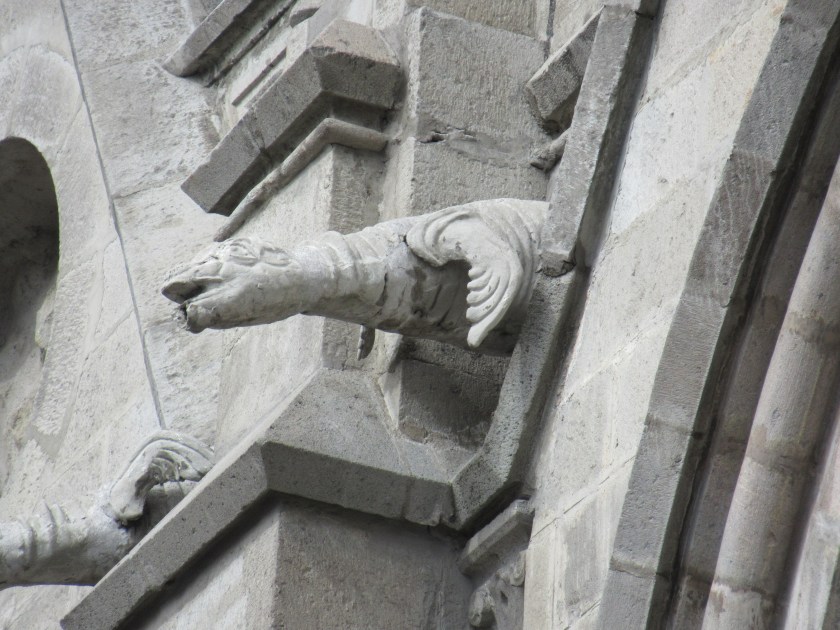
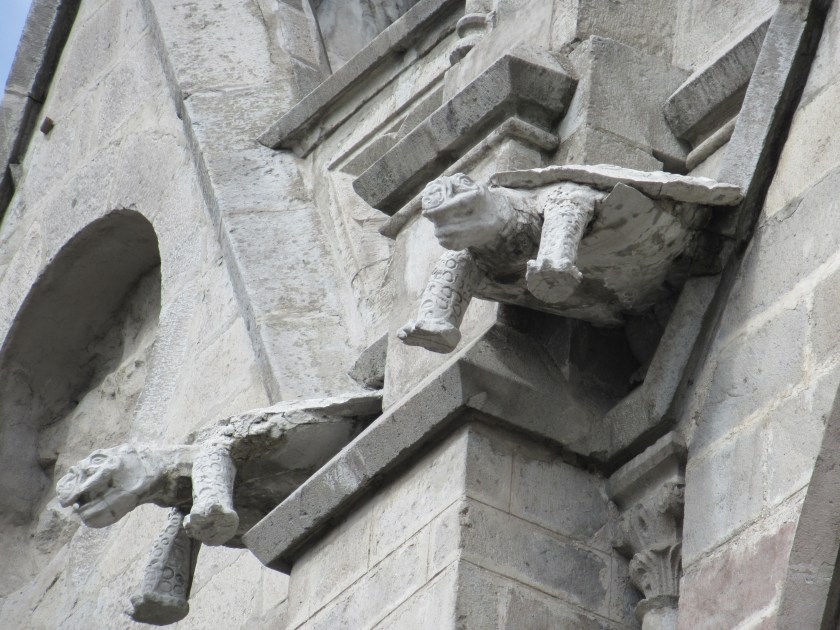

These “gargoyles” are images of animals found in the Galapagos Islands, which are actually a part of Ecuador. These are located on the side of the Basilica.

The main aisle of the Basilica looking back from the main altar.
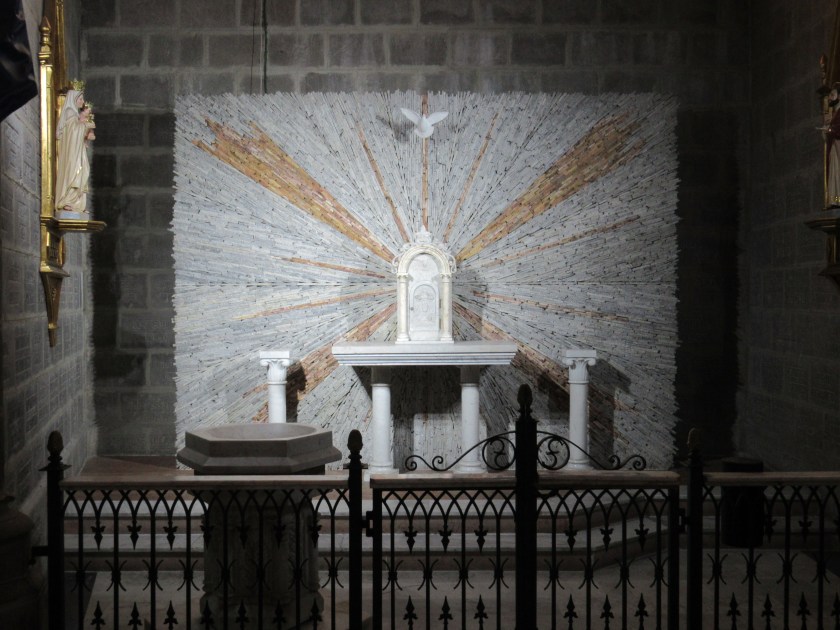
There are 24 chapels in the Basilica, one for each province of Ecuador.

An old fashioned confessional. Still used here. I can feel all of the shivers going up and down the spines all of the present and former Catholics who see this!
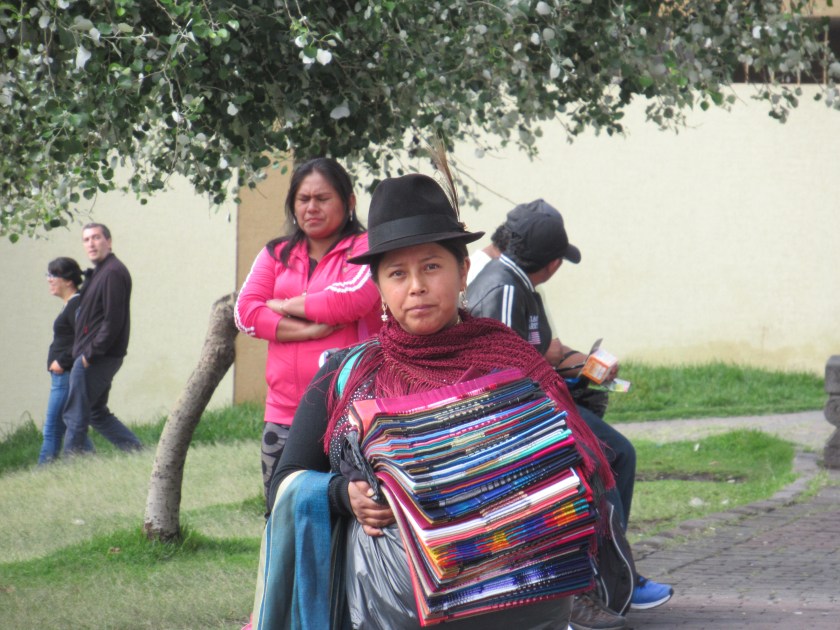
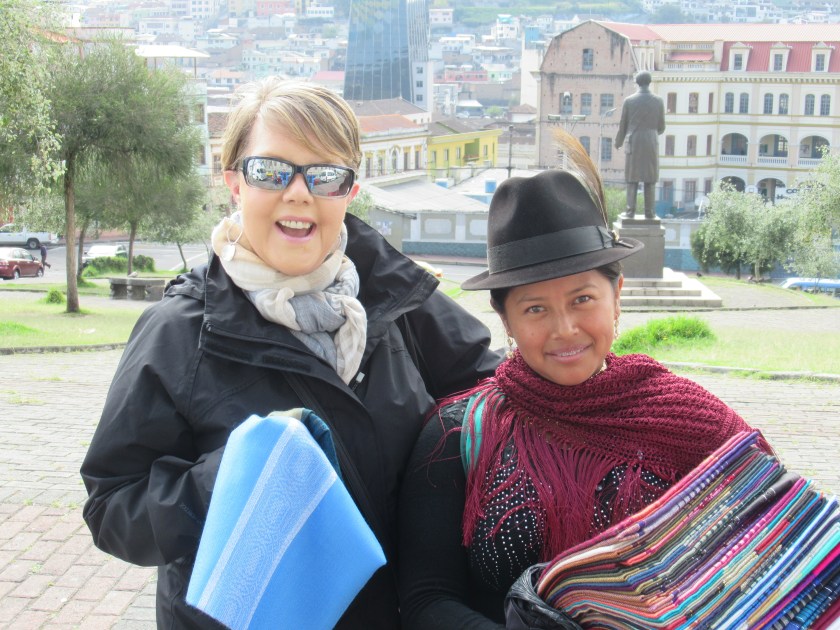
A Quichua selling colorful scarves outside of the Basilica. The hat is very common for the descendants of Incas to be seen in. Deb bought 2 scarves from her, total of $10. Deb really likes this picture, makes her look tall!!! The woman was beautiful and thankful for Deb buying these scarves from her.


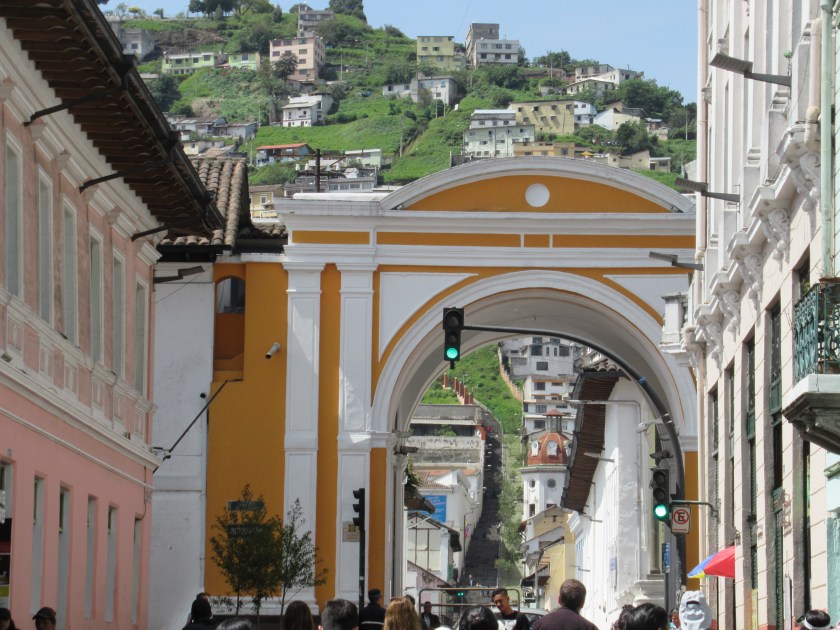

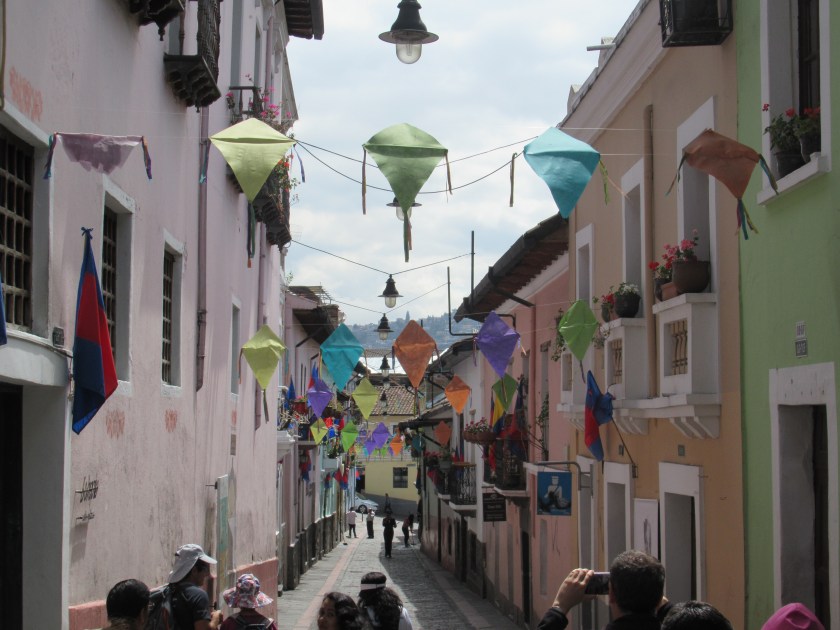
Common and colorful scenes in this area of town. The streets are from the late 1800’s for the most part, and can barely accommodate a car.

The main government building with the office of the country’s president and other officials. It is located across from Independence Square, which celebrates Quito’s defeat of the Spanish Army and the declaring of independence from Spanish colonization.

The residence of the Archbishop of Quito. It is also located across from Independence Square. and just a few steps from the President’s Office.

The Cathedral of Quito. This Archbishop is the pastor of the Cathedral and regularly celebrates Sunday Mass here.

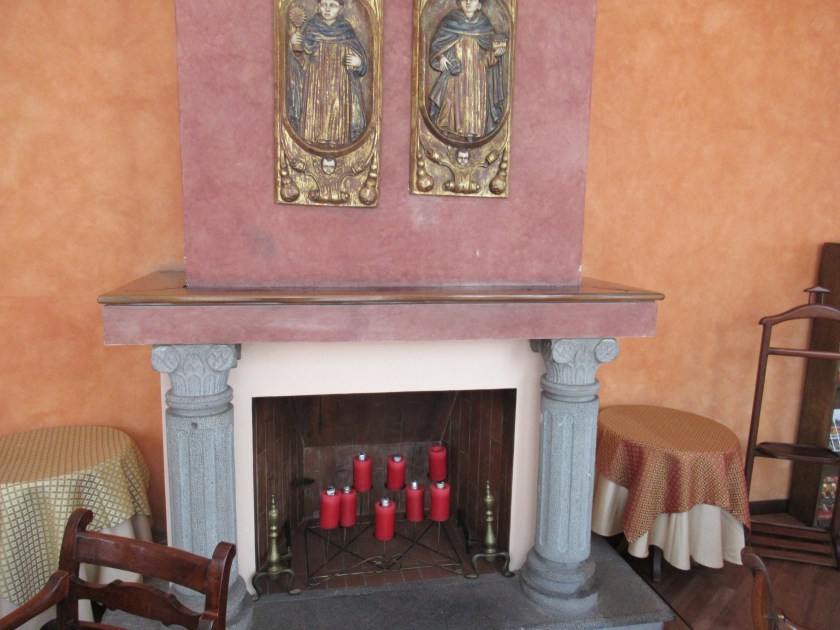
A present day hotel which at one time housed a very prominent wealthy family. The top photo shows a portion of the courtyard.
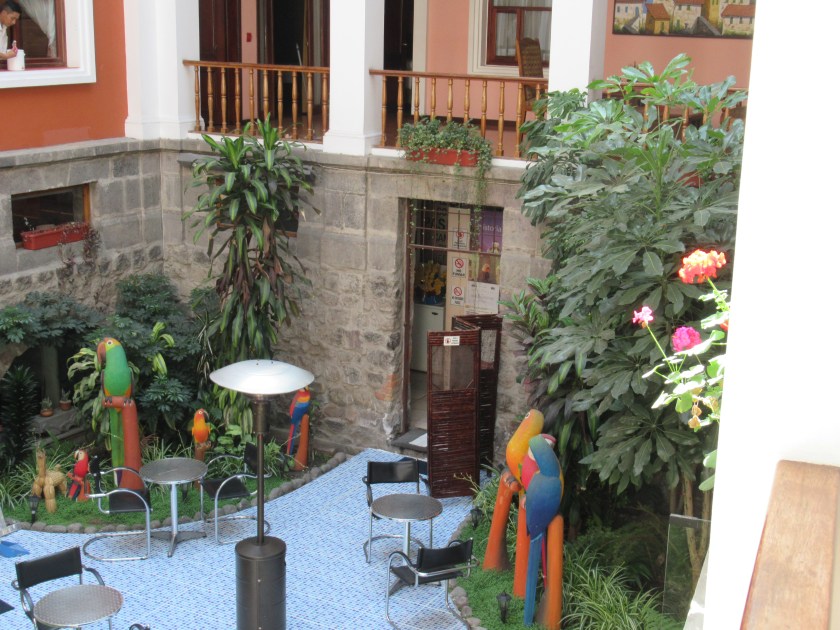

Believe it or not, these photos are of the servant’s quarters, located in back of the main portion of the house. Now it is a beautiful hotel.

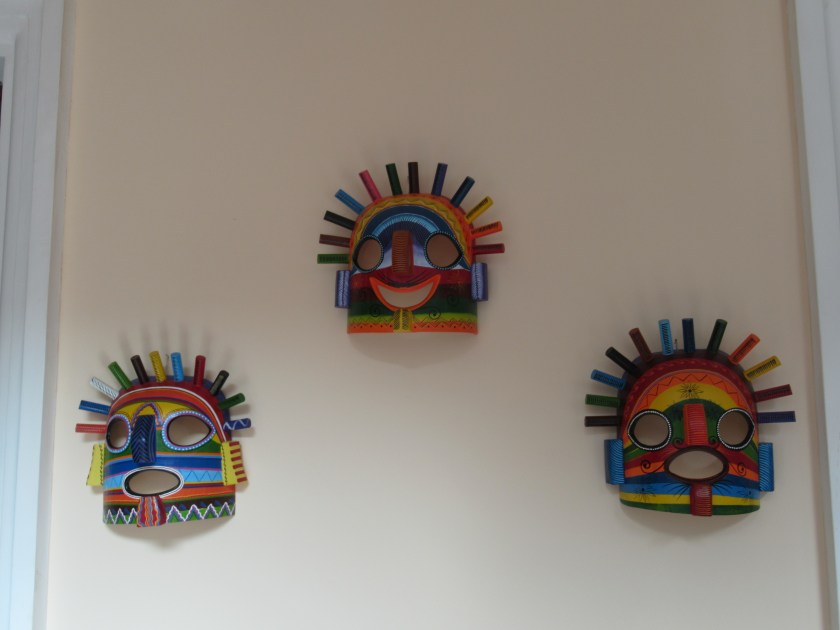
Wealthy powerful men used to wear costumes and masks during local celebrations. The 12 spikes on top of the masks are made to represent both the signs of the Zodiac and the months of the year. The photo showing a full costume is taken in the main courtyard of this house turned hotel.
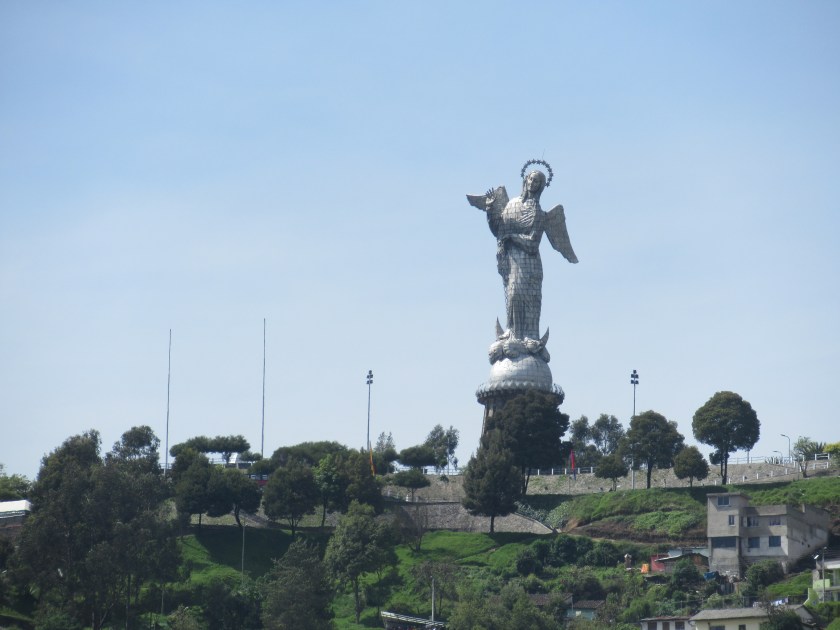
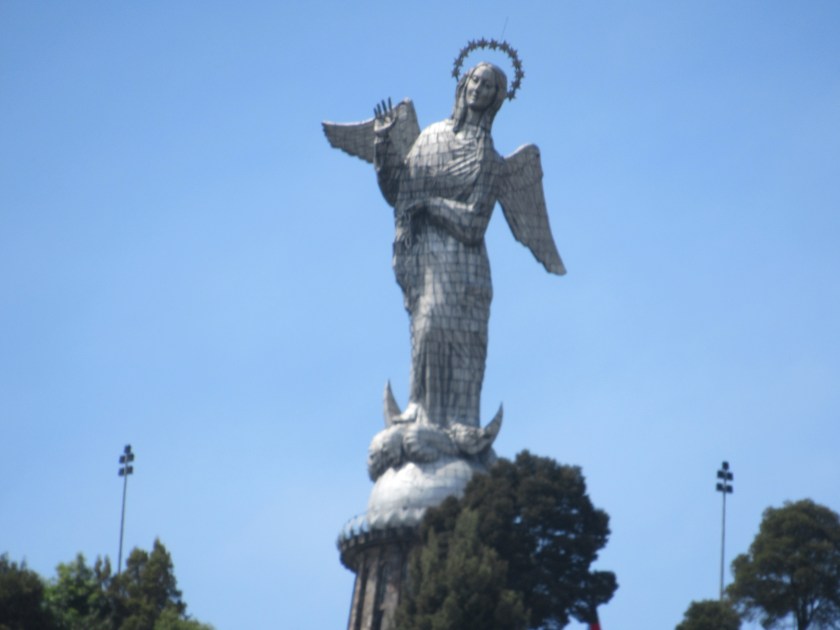
This statue can be seen from many parts of the city. It depicts the Virgin Mary standing guard over and protecting the city of Quito. It stands on a mountain at an altitude of about 9900 feet. It is made of aluminum and is 148 feet tall.
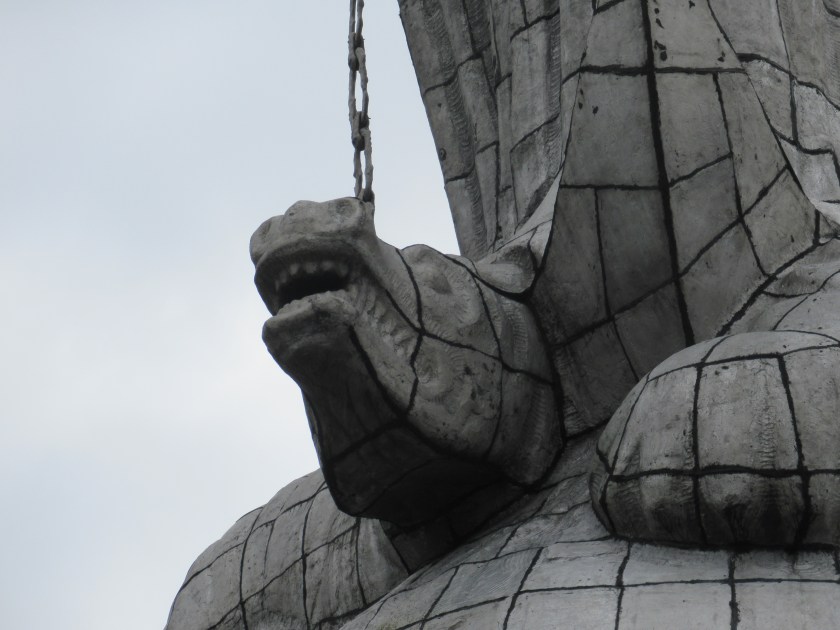
The base of the statue has Mary standing on the head of a serpent, protecting the city from it.

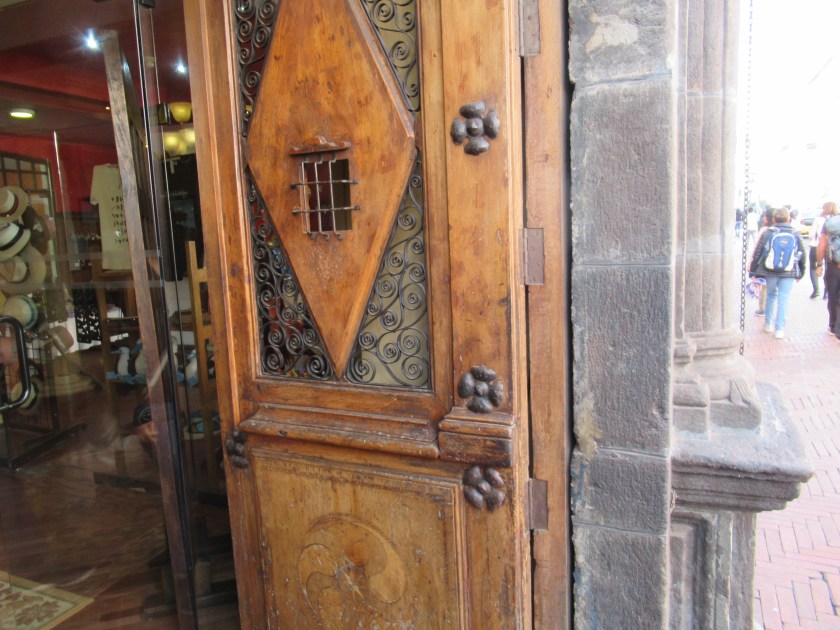

Deb loves the artwork on many of the doors in Latin America. The bottom photo is of the doors of the Quito Basilica.

This was our guide for the morning tour in Old Quito, Maria. She was friendly, knowledgeable, and took time to answer everyone’s questions. Our tour was as good as it was in a large part because of her. Thank you Maria.
The afternoon tour we went on took us to the Equator. The country of Ecuador took it’s name from the fact that the equator passes through it. The views from of the city and valley below us were amazing. We were at an elevation of close to 10000 feet! The tour took us to La Mitad de Mundo (The middle of the world). I’ll let the photos tell the story.

Notice the sign, Latitud 0 0 0. 
Deb standing in both the northern hemisphere and southern hemisphere. Pretty cool.
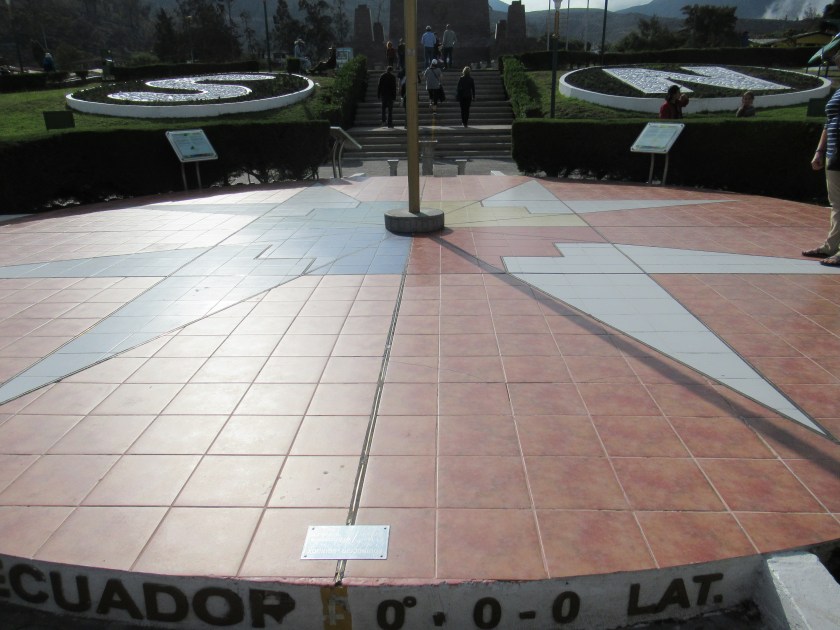
Quitsato sundial. This depicts the various solstices and equinoxes. The pole in the middle accurately shows the hours and months of the year by the shadow that is cast.
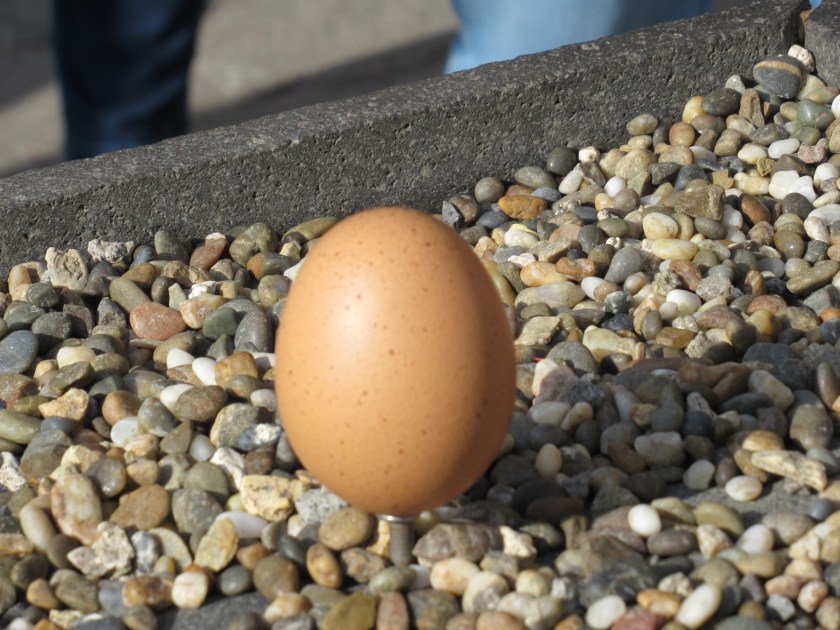
An egg can balance on the head of a nail without falling off because of the gravitational pull at the Equator. I actually balanced this egg on the nail!

A sundial showing what time it is by the shadow of the red bar extending across the roman numeral portion of the dial. This was taken at approximately 3:47 pm.

This is titled The Monument to the Equator. Self explanatory I hope!


Scenery and sights from our visit to the Middle of the World City.
This was our first full day in Quito, Ecuador. We were out and about for over 11 hours. By the time we got back to the hotel, we were tired, hungry, in need of a shower and a good meal. But we would not change a thing. It was a great day. We hope you enjoyed reading about it.
As soon as I publish this blog post I will write about our second day.
Pura Vida.
Deb and Tim.
 Deb & Tim's Adventure